Why Mobile Is Reshaping the European iGaming Experience
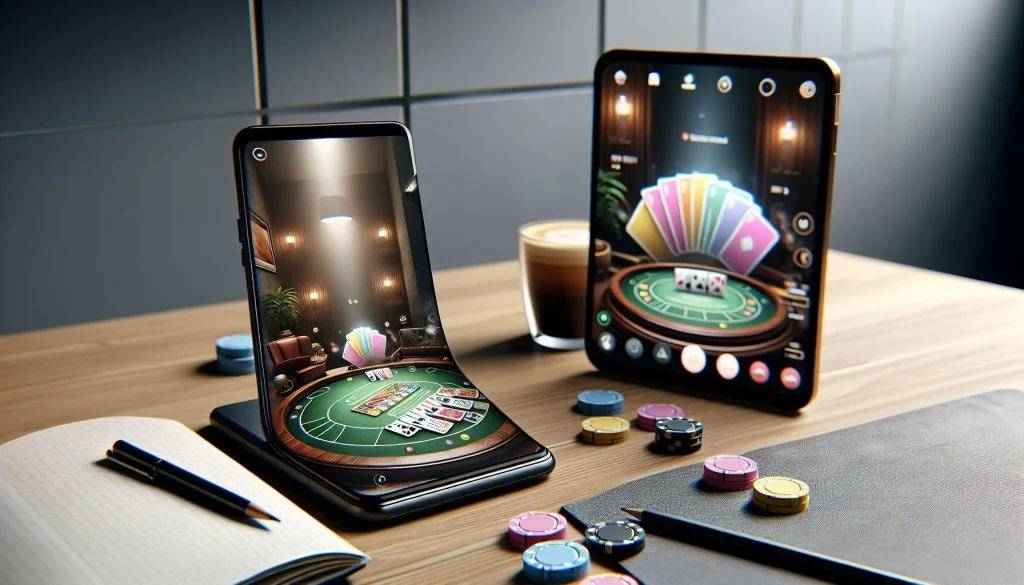
For years, online gambling meant sitting in front of a computer.
You opened a browser, logged into your account, picked a game or found a betting market, and settled in for a session.
That isn’t how much of the internet works anymore.
Phones have changed the way people consume almost everything, and online gambling is no exception. Sports betting, poker and other digital gambling products are increasingly designed around the assumption that the customer may be using a smartphone rather than a desktop computer.
But there’s an important distinction here.
Being “mobile-friendly” isn’t the same thing as being mobile-first.
A website that technically works on a phone can still feel slow, cramped and frustrating. A genuinely mobile-first gambling product is designed around the way people actually use their phones: short sessions, touch controls, smaller screens, variable connections, biometric authentication and constant switching between apps.
For operators targeting markets such as Germany and France, that distinction is becoming increasingly important.
The 70% Number Needs a Reality Check
One of the easiest statistics to put into a headline is that “70% of players gamble on mobile.”
The problem is that a single number like that doesn’t tell the whole story.
Mobile usage varies depending on the country, product and definition being measured. Someone placing a live sports bet, someone playing poker for two hours and someone buying a lottery ticket aren’t necessarily using gambling platforms in the same way.
So rather than assuming that exactly 70% of German and French players are mobile users, operators should look at their own traffic and conversion data.
The broader trend is much harder to dispute.
France’s regulated online gambling market continues to grow. In 2025, the country’s online gambling market generated €2.617 billion in gross gaming revenue, up 8.6% from 2024, with online sports betting accounting for €1.766 billion of that total. The number of unique online players also increased.
And regulators increasingly have to account for mobile behavior.
The ANJ’s own player-protection systems, for example, now use smartphone-based identity verification and dynamic selfie checks as part of its online voluntary gambling-ban process.
The message for operators is simple:
Mobile isn’t a side channel anymore.
For many customers, it’s the primary way they interact with the product.
A Mobile User Doesn’t Have Much Patience
Think about what happens when someone opens a betting app while watching a football match.
They aren’t sitting at a desk with a large monitor and plenty of time.
They may be holding the phone in one hand.
The match is happening in front of them.
They want to find a market, check the odds, select an amount and place the bet.
Every unnecessary step matters.
A slow-loading page isn’t just annoying. It can mean the user misses the market entirely.
That’s why performance should be treated as part of the product rather than a technical afterthought.
Images need to load efficiently.
Animations shouldn’t overwhelm the device.
Pages should become usable quickly rather than waiting for every element to load.
Buttons need to be large enough to tap comfortably.
And important information should be visible without forcing the customer through multiple screens.
The Three-Second Rule Isn’t a Magic Number
The original claim that users automatically abandon a slot after three seconds is too simplistic.
There’s no universal “three-second gambling rule.”
Different users tolerate different amounts of loading time, and the acceptable delay depends on what they’re trying to do.
But the underlying principle is absolutely relevant:
Every second of unnecessary friction can cost conversions.
Imagine two experiences.
Experience A
The customer opens a sports event.
The markets appear immediately.
They select a bet.
Their bet slip updates instantly.
They confirm.
Done.
Experience B
The customer opens the event.
A promotional banner loads.
Then a video background starts.
The odds take several seconds to appear.
The bet slip opens on another screen.
The login session expires.
The customer has to authenticate again.
The bet isn’t available because the market moved.
That’s not a mobile problem.
That’s a product-design problem.
But mobile makes it much more obvious.
One-Handed Design Matters
Desktop websites have plenty of screen real estate.
Phones don’t.
That changes how an interface should be structured.
Important controls should be positioned where they’re easy to reach.
Buttons need sufficient spacing.
Text needs to remain readable without constant zooming.
Bet slips should be easy to open and close.
Navigation should make sense without requiring users to remember where a feature is hidden.
This becomes particularly important for live betting.
A customer watching a match doesn’t want to navigate through five menus to find the next market.
The interface needs to anticipate what the user is likely to do next.
Vertical Screens Have Changed Game Design
Slots have traditionally been designed around landscape-oriented desktop screens.
Mobile changed that.
Many modern games are designed to work naturally in portrait mode because that’s how people normally hold their phones.
That sounds like a small design decision, but it affects almost everything:
- Reel dimensions
- Button placement
- Bonus-game layouts
- Information panels
- Paytable presentation
- Animation scale
- Touch controls
A game that simply shrinks its desktop interface isn’t necessarily a good mobile game.
The best mobile products are designed around the screen rather than squeezed into it.
Login Should Feel Invisible
Nobody wants to type a long password on a phone every time they open an app.
That makes authentication another major part of mobile UX.
Where supported, biometric authentication such as Face ID or fingerprint recognition can reduce friction.
But security still has to come first.
A gambling account contains financial information and transaction history, so operators can’t treat authentication as a cosmetic feature.
The goal isn’t “make login disappear.”
The goal is:
Make secure authentication as effortless as possible.
A customer should feel protected without constantly feeling like they’re fighting the security system.
Apps vs. Mobile Websites
The debate between native apps and mobile websites is more complicated than it used to be.
Apps can provide:
- Faster repeat access
- Push notifications
- Biometric authentication
- Device-level features
- Better persistent sessions
- More control over the user experience
But a mobile website has one major advantage:
No download.
A new customer can search for an operator, open the website and start browsing immediately.
That’s particularly important for acquisition.
An app may be better for retention.
A mobile website may be better for discovery.
The strongest operators therefore don’t necessarily have to choose one or the other. They can optimize both experiences for their respective jobs.
Push Notifications Can Be Powerful — and Annoying
Push notifications are another area where operators need restraint.
A notification can be genuinely useful:
“Your favorite team’s match starts in 15 minutes.”
Or:
“Your tournament begins at 8 PM.”
But notifications can quickly become noise.
Constant promotional messages can cause users to disable notifications altogether.
And in regulated gambling markets, advertising and responsible-gambling requirements also matter.
France, for example, has been increasing regulatory scrutiny around gambling promotion and player protection. In 2026, the ANJ continued to emphasize preventing excessive gambling and has taken enforcement action against operators for failures in player-protection obligations.
So the goal shouldn’t be:
Send more notifications.
It should be:
Send fewer notifications that actually have a reason to exist.
Live Betting Makes Mobile UX Even More Important
Sports betting is where mobile design becomes particularly obvious.
Live betting happens in real time.
Odds move.
Markets open and close.
Scores change.
The customer is often watching the event while using the betting interface.
That creates a very different UX challenge from pre-match betting.
A good live-betting interface needs to make constantly changing information understandable without becoming visually chaotic.
The customer should be able to see:
- The current score
- Time remaining
- Available markets
- Current odds
- Bet slip
- Potential return
- Confirmation status
And when something changes, the interface needs to communicate it clearly.
A mobile bettor shouldn’t have to wonder whether their bet was accepted, rejected or simply delayed because the odds changed.
One-Tap Betting Sounds Great, But There’s a Trade-Off
The phrase “one-click betting” sounds like the perfect mobile feature.
And for experienced users, reducing unnecessary steps can make the product dramatically easier to use.
But gambling products also have to balance convenience with player protection.
Removing every possible confirmation step isn’t automatically better.
A customer shouldn’t accidentally place a bet because they tapped the wrong part of the screen.
The best design therefore isn’t necessarily the one with the fewest taps.
It’s the one with the fewest unnecessary taps while keeping important decisions clear.
That distinction matters.
Battery Life Is a UX Issue Too
A gambling app doesn’t need to behave like a high-end mobile game.
Excessive animations, video backgrounds and constant background activity can consume battery and data.
That may not matter during a five-minute session.
It can matter a lot if someone is watching a live event and keeping an app open for several hours.
Good mobile engineering therefore means knowing when not to animate.
A scoreboard doesn’t need a complex 3D effect every time the score changes.
A button doesn’t need an animation every time it is tapped.
A slot game can look attractive without making the phone work unnecessarily hard.
Performance is part of the experience.
Don’t Forget Different Connections
A beautifully optimized app on a fast Wi-Fi connection can behave very differently on mobile data.
European customers won’t all have identical connection quality.
Some will use fast 5G.
Others will be on weaker 4G connections.
Some will move between Wi-Fi and mobile data during a session.
This is why testing only on the office Wi-Fi isn’t enough.
Operators should test:
- Fast Wi-Fi
- Standard mobile data
- Weak mobile connections
- Older phones
- New flagship devices
- Different screen sizes
- iOS
- Android
The question isn’t:
“Does the site work?”
It’s:
“Does the site still feel good when conditions aren’t perfect?”
France Is Becoming an Increasingly Important Mobile Market
France’s online gambling market gives operators a useful illustration of why mobile optimization matters.
In 2025, 6.1 million active player accounts were recorded across the country’s regulated online market, while 4.2 million unique players participated. Online sports betting was by far the largest online segment by gross gaming revenue, generating €1.766 billion.
And because France’s legal online market is concentrated around sports betting, horse racing and poker, mobile UX is particularly important for products that customers may access while following live events.
This is especially relevant to sports betting.
A sportsbook isn’t competing only on its odds.
It’s also competing on how quickly a player can find those odds, understand them and place a bet.
Germany Has Its Own Mobile Challenge
Germany presents a different situation.
The market is heavily regulated, with significant technical and player-protection requirements.
That means mobile UX can’t be designed independently from compliance.
Deposit limits, player verification, account controls and other regulatory requirements all have to work properly on smaller screens.
This creates an interesting design challenge.
An operator can’t simply hide important compliance information because it makes the mobile interface look cleaner.
At the same time, dumping every legal message onto the first screen can make the product almost unusable.
The solution is good information architecture.
Important information should remain accessible without overwhelming the main experience.
Accessibility Is Part of Mobile UX
There’s another area operators sometimes overlook: accessibility.
A mobile gambling interface should consider users with different visual, motor and cognitive needs.
That can mean:
- Readable text
- Sufficient contrast
- Clear buttons
- Logical navigation
- Screen-reader compatibility
- Avoiding unnecessary motion
- Clear error messages
- Consistent interface patterns
Accessibility isn’t just about satisfying a checklist.
It’s about making the product easier for more people to use.
And many accessibility improvements also improve the experience for everyone else.
A large, clearly labeled button is easier for someone with limited motor control.
It’s also easier for someone trying to place a live bet while walking down the street.
The Mobile Experience Shouldn’t Be a Smaller Desktop
This is probably the biggest lesson.
A desktop website asks:
“How can we fit everything onto this screen?”
A mobile-first product asks:
“What does the user actually need right now?”
That’s a very different philosophy.
On desktop, an operator might show dozens of betting markets at once.
On mobile, showing fewer markets with better organization may produce a better experience.
On desktop, a casino lobby can display huge numbers of games.
On mobile, recommendations, search and categories become more important.
On desktop, account settings can be tucked into a sidebar.
On mobile, they need to be structured around a simple navigation system.
Mobile isn’t a smaller version of desktop.
It’s a different environment.
What Operators Should Test
Instead of assuming what German or French players prefer, operators can answer most UX questions with testing.
Start with the basics.
Test 1: Loading speed
Measure how long the core experience takes to become usable, not just how long the entire page takes to load.
Test 2: Registration
How many screens does it take to create an account?
Where do people abandon?
Are identity and verification requirements clearly explained?
Test 3: Deposit
Can a customer understand the available payment methods immediately?
Are limits and confirmations clear?
Test 4: Betting
How many taps does it take to place a straightforward bet?
Can the customer clearly see what they’re betting on?
Test 5: Withdrawal
This is particularly important.
Customers should not have to hunt for the withdrawal button or navigate through confusing menus.
Test 6: Error handling
What happens when odds change?
What happens when a payment fails?
What happens when the connection disappears?
Good UX isn’t about preventing every error.
It’s about making errors understandable when they happen.
The Bottom Line
The future of European iGaming isn’t necessarily “mobile instead of desktop.”
It’s mobile as a primary experience.
The exact percentage of players using phones will vary by market, product and operator, so a blanket claim that 70% of German and French players gamble on mobile is too simplistic.
But the strategic lesson remains.
If a significant share of your customers interact with your sportsbook, poker room or gambling account from a phone, the mobile experience can’t be treated as an afterthought.
Fast loading matters.
Simple navigation matters.
Secure authentication matters.
Clear betting flows matter.
Good touch controls matter.
Battery and data efficiency matter.
And perhaps most importantly, regulatory requirements have to be integrated into the experience rather than bolted on afterward.
The operators that understand this won’t simply build websites that happen to work on smartphones.
They’ll build products that feel like they were designed for smartphones from the beginning.
Leave a Reply